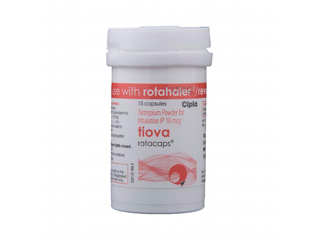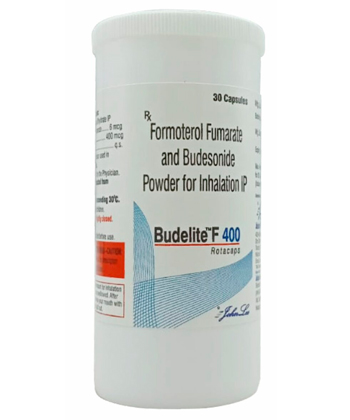
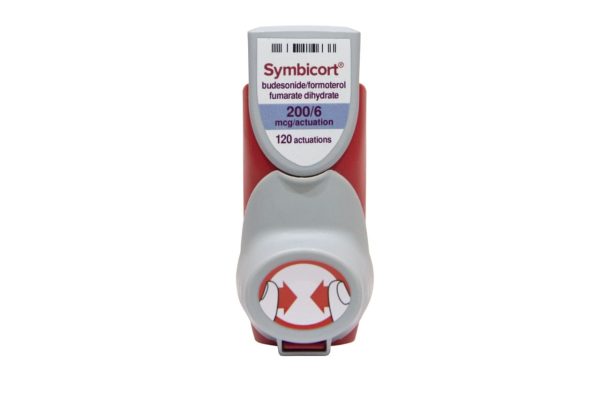
Symbicort (Powder Form) (Budesonide / formoterol fumarate dihydrate)
$0.00
Symbicort is a drug in powder form for inhalation based oт budesonide and formoterol. It is an powder spray inhaled orally. Budesonide is a corticosteroid which is used to reduce inflammation. Formoterol is a slow-acting bronchodilator used for opening the bronchioles to assist respiration.
Common use
Symbicort can help prevent and treat asthma in adults and children more than six years old.
Symbicort can help treat forms of Chronic Obstructive Pulmonary Disease including emphysema and bronchitis.
Symbicort is a slow-acting formula that works in conjunction with fast-acting drugs to relieve asthma and COPD symptoms. Symbicort is not a replacement for fast-acting asthma medications or rescue inhalers.
Symbicort works by reducing inflammation and dilating the bronchioles, thus relieving some of the main symptoms of Chronic Obstructive Pulmonary Disease and Asthma.
Dosage and direction
Symbicort is administered twice daily with 12 hours between administrations. Each administration consists of two oral inhalations of Symbicort. Be sure to follow the dosage and usage instructions provided by your doctor.
To administer Symbicort:
- Shake well, and inspect mouthpiece for debris.
- Exhale fully and seal mouth around the mouthpiece of the Symbicort inhaler, aiming the upright inhaler at the back of your throat.
- Press down firmly on the top of the inhaler while inhaling deeply and slowly.
- Inhale for as long as is comfortable, and hold your breath for several seconds.
- Release your finger from the top of the inhaler, remove the inhaler, and breathe normally.
- Repeat 1-6 for second dose.
- Rinse mouth thoroughly after use.
How to use:
Instructions for use of Symbicort Turbuhaler 160/4.5 mcg/doseHow to prepare a new inhaler for useBefore using a new Symbicort Turbuhaler for the first time, you need to prepare theinhaler for use as follow:1. Unscrew the cover and lift it off. A rattling sound is heard when you unscrew thecover.2. Hold the inhaler upright with the grip at the bottom (Figure 2). Do not hold themouthpiece when you turn the grip.3. To load the inhaler, turn the grip as far as it will go in one direction. Then turn itback as far as it will go in the other direction. It does not matter which way youturn it first. You will hear a click during this procedure. Repeat this proceduretwice.
Figure 14. The inhaler is now ready for use.Using the inhalerEvery time you need to take an inhalation, follow the instructions below:1. Unscrew the cover and lift it off. A rattling sound is heard when you unscrewthe cover.2. Hold the inhaler upright with the red grip at the bottom(Figure 2).3. Do not hold the mouthpiece when you turn the grip. Toload the inhaler with a dose, turn the grip as far as it willgo in one direction and then turn it as far as it will go in theother direction. It does not matter which way you turn it first. You will hear acovergripmouthpiecedose indicatorFigure 2click during this procedure. Your Turbuhaler is now loaded and ready to use.Only load your Symbicort Turbuhaler when you need to use it.4. Hold your Turbuhaler away from your mouth. Breathe out gently. Do notbreathe out through the mouthpiece.5. Gently place the mouthpiece between your teeth. Close your lips and breathein deeply and forcefully through your mouth (Figure 3 do not chew or bitethe mouthpiece).Figure 36. Remove the inhaler from your mouth before you breathe out. Since theamount of medicine that is inhaled is very small, you may not be able to tasteit after you inhale, however, if you have followed the instructions, you can beconfident that you have inhaled the dose.7. If you have been prescribed more than one inhalation, repeat steps 2-68. Screw the cover on back tightly.9. Rinse your mouth with water; do not swallow.Attention!• Replace the cover properly after use.• Do not try to remove or twist the mouthpiece. It is fixed to the inhaler and mustnot be taken off. The mouthpiece can be turned, but avoid doing thisunnecessarily. Do not use your Turbuhaler if it is damaged or if themouthpiece has come off the inhaler.• As with all inhalers, caregivers should ensure that children use correctinhalation technique, as described above.CleaningClean the outside of the mouthpiece regularly (once a week) with a dry tissue.Do not use water or other liquids to clean the mouthpiece.
Precautions
Symbicort is a slow acting anti inflammatory and bronchodilator. It is not a rescue inhaler and should not be used as a first resort to treat an asthma attack, as its effects are too slow.
If you experience an asthma attack, take only your fast-acting medication. If relief does not follow, do not take Symbicort, dial 911.
If Symbicort gets into your eyes, rinse thoroughly with water. If redness or irritation persists, contact your doctor.
Contraindications
Symbicort is contraindicated as a primary treatment for asthma or COPD. Symbicort should only be used in conjunction with other asthma or COPD treatments.
Symbicort is contraindicated for patients who experience hypersensitivity or allergy to budesonide or formoterol.
Possible side effect
Possible common side effects of Symbicort are flu-like symptoms including
Runny nose
Aches and tiredness
Tenderness around the nose and eyes
Ear congestion
Sore throat, difficulty breathing, coughing, sneezing, loss of voice
Fever and chills
Headaches
Tightness in chest
Less common side effects of Symbicort include
- Frequent urge to urinate, bladder pain, bloody or cloudy urine, burning pain while urinating
- Congestion, mucus producing cough, dry throat, hoarseness
- Diarrhea, stomach pain, vomiting, loss of appetite
- Erratic or irregular pulse, increased pulse
- Joint pain
- Tenderness or pain in lower back or side
- Tenderness or swelling around neck and throat, sore mouth or tongue, voice changes, noisy breathing, trouble swallowing, white patches on the tongue or mouth
- Shaking or trembling of the extremities and limbs
- Shivering, sweating
- Trouble sleeping
Rare and serious side effects of Symbicort include
- Blurred vision, confusion, dizziness, fainting, seizures
- Dry mouth
- Enlarged pupils, sensitivity to light
- Flushed skin
- Fruit-like breath odor
- Hive like swellings on mouth, tongue, throat, face, hands, feet or genitals
- Severe headache
- Severe chest pain, irregular heart beat
Drug interaction
Symbicort should not be taken with other anti-inflammatory drugs or other bronchodilators. Symbicort should not be used with expectorants. Symbicort may reduce the effectiveness of certain blood glucose affecting drugs or stomach acid affecting drugs.
For more complete drug interaction information, refer to the complete list of interactions provided with your Symbicort inhaler or ask your pharmacist.
Missed dose
If you miss a dose of Symbicort, take your next scheduled dose. Do not take a “make-up” dose.
Overdose
If an overdose occurs, contact your doctor immediately. Overdose symptoms may include becoming extremely short of breath, having an erratic pulse, or becoming disoriented. If one or more of these side effects occur, dial 911.
Storage
Symbicort should be kept upright in a dry location between 20°C to 25°C (68°F to 77°F).
If your Symbicort inhaler has not been used for seven days or more, you must prime the inhaler by shaking it for five seconds and spraying a dose away from yourself.
Disclaimer
We provide only general information about medications which does not cover all directions, possible drug integrations, or precautions. Information at the site cannot be used for self-treatment and self-diagnosis. Any specific instructions for a particular patient should be agreed with your health care advisor or doctor in charge of the case. We disclaim reliability of this information and mistakes it could contain. We are not responsible for any direct, indirect, special or other indirect damage as a result of any use of the information on this site and also for consequences of self-treatment.